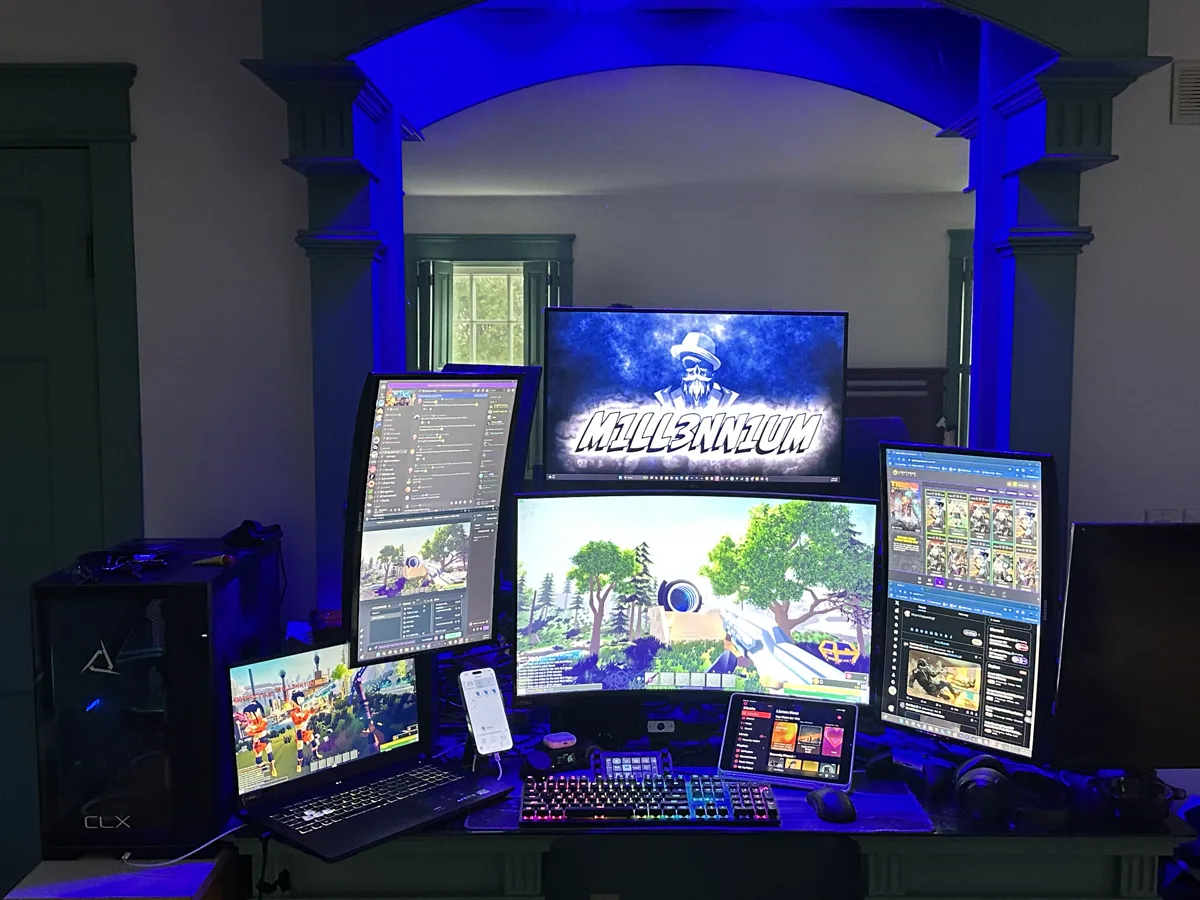
Clarification up front: M1LL3NN1UM is a gaming clan and stream crew. We do not ship commercial titles. We play them, clip them, and yell about them. This dispatch is player doctrine — what we demand from studios that want our time, our money, and our Discord nights.
A publisher once told a room full of veterans that mod support was "phase two." Phase two, in calendar math, meant eighteen months after launch — right after the battle pass season ended and right before the deluxe remaster with microtransactions nobody asked for. The whiteboard rule we still live by as players is simpler: mods on day one, or you are renting a theme park ride, not owning a game.
This is not charity for hobbyists. This is survival math for communities that remember when games we're platforms instead of prisons.
We Owe the Modders Our Hobbies
Half-Life became Counter-Strike because modders we're faster and smarter than the original design doc. Doom outlived every competitor from 1993 because you could build your own hell in WAD editors before breakfast. Warcraft III custom maps birthed entire genres that corporations eventually monetized and then strangled. The pattern is always the same: community invents, corporation absorbs, corporation kills the open playground.
We are Gen X. We were the kids downloading Total Conversions from bulletin boards. We were the teenagers running dedicated servers on Pentium machines that sounded like jet engines. We know exactly who kept games alive when the marketing budget ran dry.
Modders are not free labor. They are co-authors. Treat them like contractors you forgot to pay and they will build someone else's universe — and we will follow them there.
"Phase Two" Is Where Player Scenes Go to Die
Delay mod tools and you get a launch window measured in weeks. Players burn through curated content. Streamers move on. Clan Discords go quiet except for bug reports and refund threats. Then the studio announces a "content roadmap" that is really a plea for engagement metrics.
Ship mod tools at launch and the timeline inverts. Week one is vanilla. Week three someone ships an absurd mutator that becomes the only way anyone plays. Month two there are tournament maps the dev team never imagined. Year five — if the tools are good — the game has a second identity entirely, and nobody had to hire forty narrative designers to write seasonal lore about a snowman skin.
As a clan, we would rather play something ugly and immortal than polished and forgotten.
What "Day One" Means to Us (As Players)
Day one does not mean a PDF and prayers. When we evaluate a game for long-term squad nights, we look for:
- Documented tools — map editors, asset pipelines, scripting hooks, example projects that compile without tribal knowledge.
- Workshop or equivalent — one-click subscribe, version pinning, conflict warnings when two mods fight over the same weapon slot.
- Dedicated server tools — headless binaries, RCON, logging. Competitive scenes need infrastructure, not Twitch drops.
- Legal clarity — non-commercial mod distribution allowed without a lawyer on retainer.
- Sample content — official templates so nobody stares at an empty project folder and gives up.
If a studio cannot ship that with the game, we treat "mod support coming later" as marketing fiction until proven otherwise.
The Studio Objections (Player Rebuttal Catalog)
"Mods fragment the player base."
So does DLC. So does platform exclusivity. So does forcing a 120 GB patch because someone added a battle royale mode at 2 AM. Mods fragment product. They unify community. A fragmented base that cares beats a unified base that left.
"Mods break balance and support costs explode."
Separate ranked queues. Flag modded servers in the browser. Support vanilla first. This is solved infrastructure from 2004. Pretending modded clients are indistinguishable from retail is laziness, not philosophy.
"We need to protect our IP."
Nobody is launching a competing franchise because you shipped a map editor. They are launching it because your game is good and they want the credit. IP fear is how you end up with a sterile game and a lawsuit against a teenager who fixed your UI.
"Mod tools are expensive."
So is customer acquisition. So is influencer marketing. So is rebuilding an entire live-service stack every fiscal year. Mod tools are capital that pays dividends in retention — the metric publishers pretend to worship until it conflicts with quarterly skin revenue.
What This Means for M1LL3NN1UM Nights
We queue extraction ops, discovery nights, and rotation picks based on whether a game still feels like something you can own. Titles that lock the playground behind seasons and FOMO get short rotations. Titles that still feel like platforms get clan lore, custom rules, and long-term Discord channels.
When we talk about Landfall energy, CRT shaders, or server browsers on stream, we are not pitching a studio roadmap. We are describing the kind of multiplayer culture we grew up in — and the standard we hold modern games to.
A Message to Indies and AAA Alike
You do not need a blockbuster budget to respect players. You need conviction and a schedule that treats community tools as parallel to core development, not a stretch goal after certification. Cut a cosmetic feature before you cut the SDK. Your Discord will thank you. Your long-tail sales curve will thank you. The seventeen-year-old who builds the map everyone plays at 2 AM will thank you — and they might build the next scene you wish you owned.
M1LL3NN1UM is a clan. We cannot out-spend giants. We can out-last disposable seasons by showing up for games communities actually own. Day-one mod tools are not a marketing bullet on our about page. They are the contract we want every studio to sign with every player who remembers when games we're platforms, not prisons.
Buy the game. Break the game. Make it better. That is the loop. That is how we got here. That is how the good ones stay here.