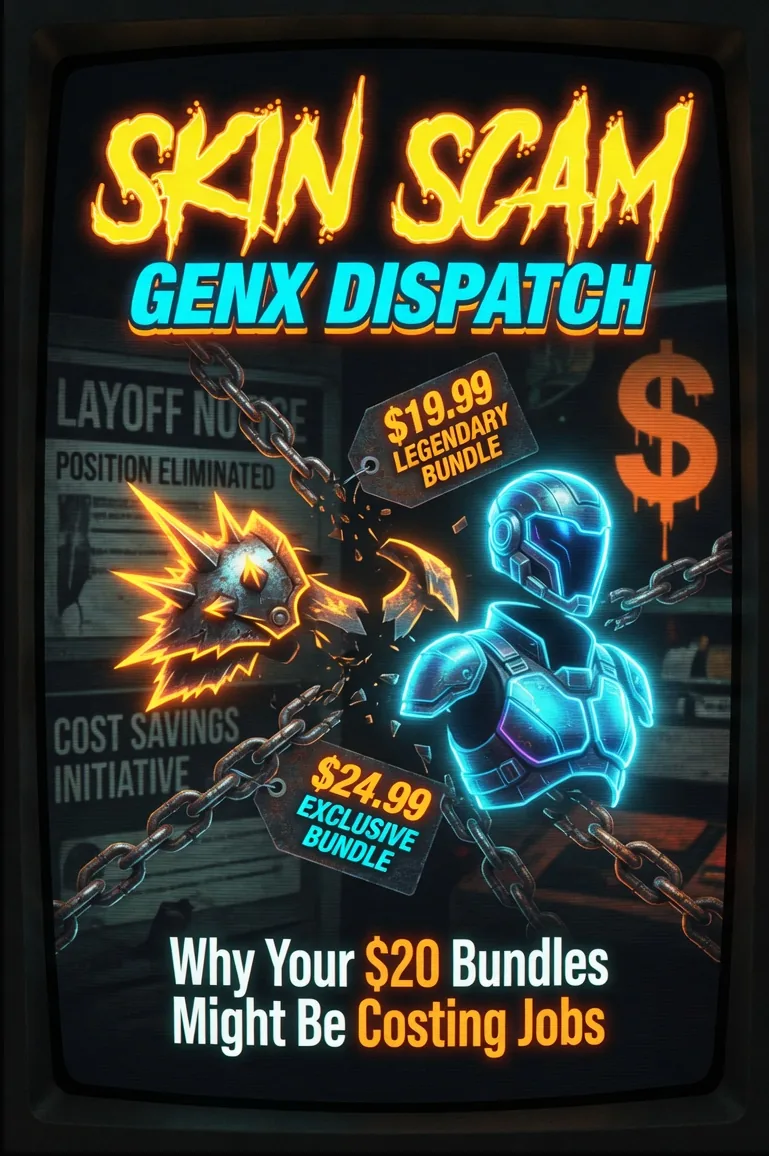
Listen up.
Cosmetic skins have been sold to us as the "harmless" form of monetization for years. "It doesn't affect gameplay," they say. "It's just cosmetics." Bullshit.
The way most modern games push skins — limited-time bundles, FOMO timers, battle pass tie-ins, and constant drip-feed of overpriced outfits — is predatory by design. And when you start looking at the money flowing through licensed collaborations (Marvel, Star Wars, celebrities, brands), the picture gets even uglier. Resources that could go toward better core gameplay, stable teams, or actual content are instead funneled into chasing the next big collab and keeping the cosmetic treadmill spinning.
The hot take floating around is this: licensing costs and the constant push for new skins are indirectly costing people their jobs. Is there truth to it? Let's dig in.
Skins as a Monetization Scam
First, the basic truth most players already feel in their wallet:
- A single legendary skin or bundle in many live-service games now routinely costs $20–$50+.
- These are almost always time-limited or bundled in ways designed to trigger FOMO.
- The actual production cost for many of these (especially simple recolors or minor model tweaks) is nowhere near what players are being charged.
This isn't new. Fortnite popularized the model and made billions from it. Call of Duty, Valorant, Apex, and plenty of extraction shooters have copied it. The defense is always the same: "It's optional. It doesn't give gameplay advantages."
The problem isn't that cosmetics exist. The problem is how they've become the primary revenue driver for many live-service games. When a studio's financial health depends on constant skin sales, priorities shift. Core gameplay updates, single-player content, bug fixes, and long-term vision often take a backseat to "What collab can we drop next month to spike revenue?"
That's the scam. Not the pixels themselves — the way the entire live-service machine has been built around milking players for cosmetics while delivering less and less actual game.
Licensing Fees and Where the Money Actually Goes
Licensed skins and collaborations are a huge part of the modern skin economy. Fortnite has made serious bank from Marvel, Star Wars, music artists, sports leagues, and more. One NFL collab set reportedly brought in around $50 million. These deals drive massive spikes in player spending.
But licensing isn't free.
IP holders (movie studios, brands, celebrities, sports leagues) take a cut — sometimes a significan't one. On top of that, studios have to:
- Pay for the rights
- Create high-quality assets that actually fit the game's art style
- Handle legal clearances
- Market the collab heavily
This work requires artists, designers, producers, and marketing people. Those are real salaries and real hours. When a studio is constantly chasing the next big licensed drop to keep revenue numbers up, a non-trivial portion of the art and design team's time goes into cosmetics instead of core gameplay systems, new maps, better balance, or actual new experiences.
Is this directly causing layoffs? Not in a clean "we paid for this Spider-Man skin so now we had to fire ten engineers" way. The bigger documented drivers of the last few years of mass layoffs (tens of thousands of jobs) have been post-COVID overexpansion, skyrocketing AAA development costs, and live-service games failing to retain players long enough to justify the teams built around them.
However... there is a real connection worth calling out.
The Indirect Truth
When a studio's business model becomes heavily dependent on constant cosmetic revenue (especially expensive licensed ones), it creates a fragile system:
- They hire (or keep) more people focused on cosmetics and live-service content.
- When player spending slows or a game underperforms, those high ongoing costs become a problem.
- Instead of having built sustainable core gameplay that keeps people playing for years, they're stuck in a cycle of "drop new skins or die."
- Layoffs hit — often across the board, including people who weren't even working on cosmetics.
We've seen studios and publishers lay off staff while simultaneously leaning harder into MTX and live-service models. The priorities are backwards. The money being made from skins and collabs is real, but the model encourages short-term revenue grabs over long-term game health. When the revenue doesn't keep growing fast enough to cover the bloated teams and expensive licensing deals, people get cut.
It's not usually the licensing fee itself that "costs jobs." It's the entire philosophy of treating cosmetics as the main product while the actual game becomes secondary content to support the store.
What Should Actually Happen
Skins aren't going away. People like looking cool. But the current implementation in most big live-service games is greedy and unsustainable.
Better paths exist:
- Fairer pricing and less aggressive FOMO.
- More focus on earning cosmetics through gameplay instead of pure cash shops.
- Treating cosmetics as a bonus revenue stream instead of the foundation the entire live-service house is built on.
- Actually investing the money from skins back into making the core game better instead of just funding the next collab cycle.
The industry has spent years telling players that cosmetics are harmless while quietly restructuring entire studios around selling them. Now we're watching the consequences play out in layoffs, canceled projects, and games that feel more like storefronts than experiences.
Skins themselves aren't the root evil. The scam is the model that made them the main character.
Do you think cosmetic monetization has gone too far? Have you ever felt priced out of a game you otherwise liked because of how aggressive the store was? And do you buy skins anyway, or have you completely checked out of that part of modern gaming?
Sound off in #general on Discord.
GENX → NEXT.
No quarter on bad design.
All respect for the ones still building it right.