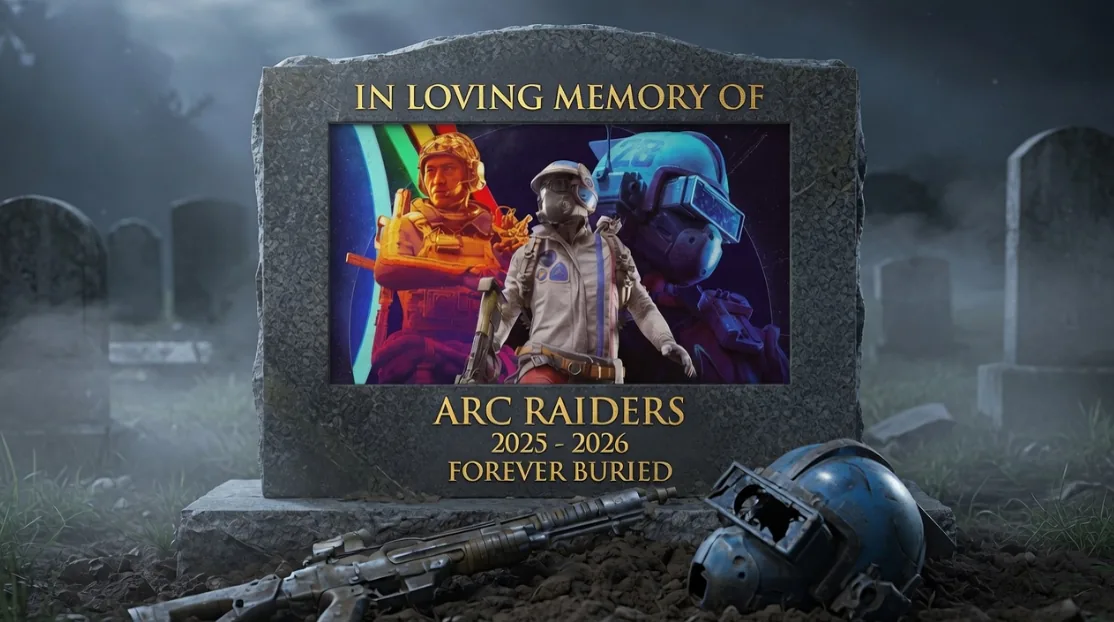
Look. I sat down with your shiny new $80 game last weekend. I gave it a fair shot — more than fair, actually. I read the patch notes. I watched a twelve-minute YouTube explainer on the crafting loop. I signed up for the newsletter that promises "exclusive rewards" if I link my account to seventeen different platforms. I did everything a modern player is supposed to do before they are allowed to have fun.
Forty-five minutes later, I uninstalled it.
Not because the graphics we're bad. Not because the voice acting was wooden, though it was. Not even because the protagonist has the personality of a damp paper towel. I uninstalled it because the game never once asked me to play. It asked me to manage. To optimize. To check in. To grind. To engage with systems upon systems upon systems until the actual act of shooting something or jumping somewhere felt like an afterthought buried under six layers of menu navigation.
The 47-System Problem
I counted. Your game has a battle pass. It has a seasonal event tracker. It has crafting, dismantling, re-crafting, and a separate "transmute" menu I still do not understand. There are four currencies — five if you count the premium one that shows up in gray text with a lock icon, which of course you are meant to buy. There is a hub world. There are daily login bonuses. There are weekly challenges. There are faction reputations, weapon mastery tracks, companion affinity meters, and a "legacy codex" that unlocks lore entries I will never read.
Forty-seven distinct systems, by my conservative estimate. And zero soul.
Back in my day we had one currency: skill. You put a quarter in the machine. You learned the patterns. You died. You put another quarter in. You got better. The game did not need a tutorial because the tutorial was failure, and failure was free — except for the quarters, which taught you to take the game seriously.
A game that needs 47 tutorials is not a game. It is a spreadsheet with a gun mod.
Modern live-service titles are not designed to be finished. They are designed to be inhabited. Like a strip mall you visit every Tuesday because the coffee shop gives you a punch card. The game does not want you to master it and move on. It wants you to lease your attention indefinitely, trading hours of your finite life for digital trinkets that expire when the season ends.
What Happened to Just Playing?
I remember booting up Quake in 1996. No account creation. No day-one patch. No "welcome package" pop-up offering me a starter bundle for $4.99. I selected a difficulty, picked a level, and shot things until my eyes bled or my mom called me for dinner. The entire loop was: load, play, die, reload, play better. That was the contract between developer and player, and both sides honored it.
Your favorite game breaks that contract on the loading screen.
Before you see a single enemy, you must:
- Create or link an online account
- Accept three pages of terms you will not read
- Download a 14 GB day-one patch
- Sit through an unskippable "season overview" cinematic
- Complete a mandatory three-hour tutorial that teaches you how to open menus
- Choose a "starter path" that locks you into a build before you understand the game
- Receive seventeen notifications about things you should buy
By the time you reach actual gameplay, you are exhausted. Not challenged — exhausted. The game has already won. It has converted your session from play time into admin time, and admin time is what live-service games are built to maximize.
The Dopamine Treadmill
Publishers will tell you this is "player choice." That having forty-seven systems means forty-seven ways to engage. What they mean is forty-seven hooks to keep you logging in when you would rather be doing literally anything else.
Every notification is a leash. Every daily challenge is a shift at a job you did not apply for. Every seasonal reset is a rug pull disguised as freshness. You are not a player. You are a daily active user metric, and your engagement is the product being sold to shareholders.
I am not against complexity. System Shock 2 was complex. Morrowind was complex. Dwarf Fortress is so complex it could qualify for government funding. But complexity in those games served the fiction, the challenge, or the emergent possibility space. Complexity in your favorite game serves the retention dashboard.
Why We Stopped Making Games for This Audience
At M1LL3NN1UM, we made a decision. We are not building for players who need a constant drip of dopamine to feel like a session was worthwhile. We are building for players who remember what it felt like to beat a boss after thirty attempts and punch the air like they just won the Olympics.
That audience still exists. They are just quieter than the battle pass crowd because they are too busy actually playing games instead of posting about them.
Our titles — Landfall '89, Grumpy's Last Stand, Neon Veteran — share a philosophy your favorite game would find alien:
- You buy the game once
- You launch the game
- You play the game
- The game respects your time
- When you are done, you are done — no FOMO, no expired cosmetics, no "you missed the event" guilt
Radical, I know.
Your Game Is Not Bad Because It's Popular
Let me be clear: I am not saying popular games are bad because they are popular. I am saying your favorite game is bad because it prioritizes engagement metrics over craft. Because it treats you like a wallet with thumbs. Because it confuses content volume with content quality. Because somewhere between the hub world and the third currency, the developers forgot that games are supposed to be fun, not homework.
Mine is better not because I say so, but because you can describe what our games are in one sentence. "A 90s deathmatch FPS with modern netcode." "A tower defense where you yell at enemies." "A roguelike where every run is a war story." Try describing your favorite game in one sentence without using the words "seasonal," "progression," or "live-service."
You cannot. That is the problem.
The Hill We Will Die On
Games should be hard, honest, and worth your time. Not worth your attention — your time. There is a difference, and Gen X learned it the hard way by feeding quarters into machines that did not care if we showed up tomorrow.
Your favorite game sucks. Mine is better. And if that makes you mad, good — go beat something on the hardest difficulty without looking up a guide. That is how we used to settle arguments.