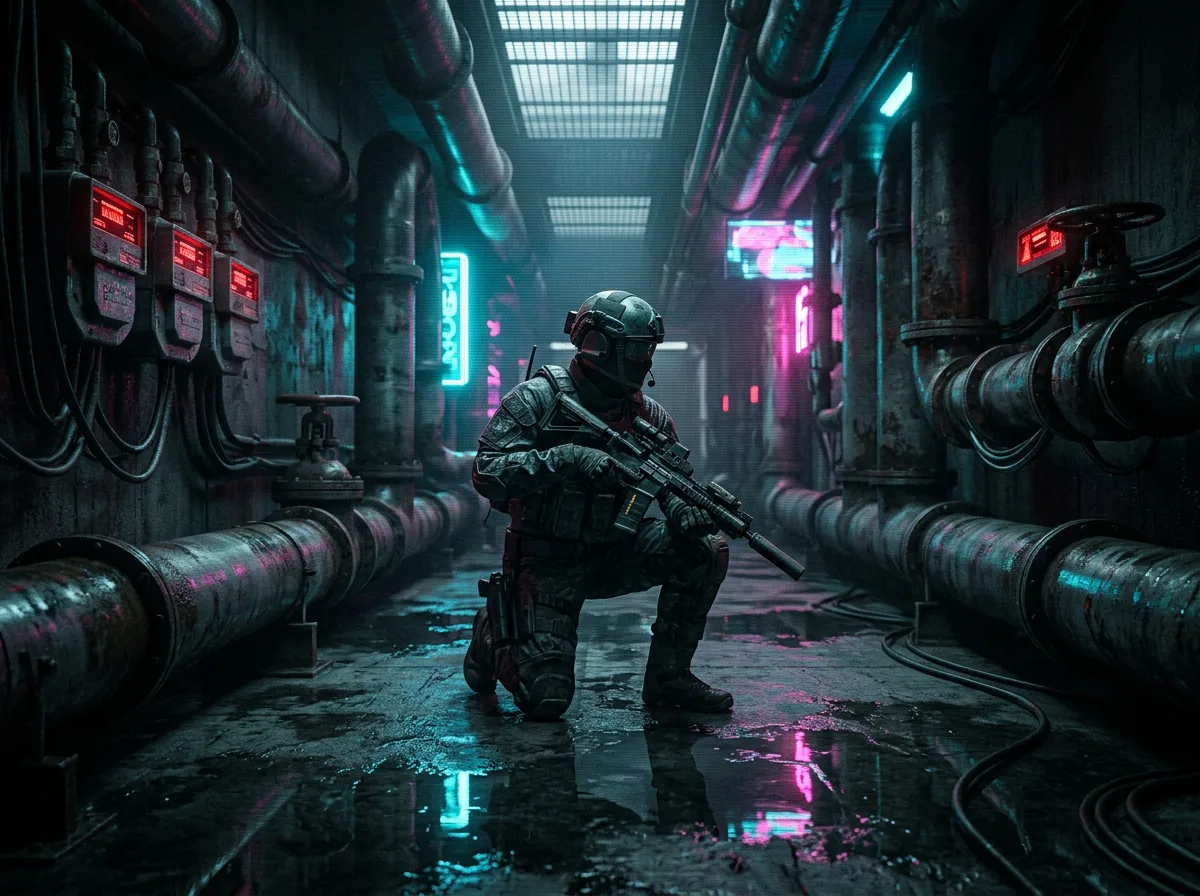
Let's drop the corporate diplomacy and look at the raw data.
I manage heavy physical infrastructure for a living. I run bulk energy plants, large industrial installations, and high-pressure gas pipelines. In my world, system integrity is absolute. If your diagnostic instruments throw pressure drops, if you have a massive fluid leak, or if the main line gets completely contaminated by outside parasites, you don't minimize it. You don't hide behind slow, administrative PR statements, and you sure as hell don't route the clean, optimized product to a region-locked backup manifold while leaving your core global grid to rot. You lock down the system and execute a hard pipeline purge immediately.
Unfortunately, Embark Studios is running the ARC Raiders infrastructure like an absolute amateur hour operation.
Between a stagnant, six-month major content freeze, the outright betrayal discovered inside their region-locked China closed beta, and a toothless, reactive anti-cheat setup that treats game security like an optional suggestion, the studio is actively running a promising extraction loop straight into the dirt.
Here is the full, unfiltered operational audit of exactly how the pipeline is collapsing.
1. The Broken Math of the Stretched Cadence
Live-service extraction shooters are a high-friction, fast-decay ecosystem. If the player base smells stagnation, the queue times spike, the casual base evaporates, and the game dies.
Embark's announcement that they are stretching their major update lifecycle to a staggering six-month cadence—leaving global operators completely starved for content until October's 'Frozen Trail' patch—is an admission of structural development bottlenecks. They are onboarding external partners and expanding creator programs to mask a hollow internal production line. You do not compete against aggressive, fast-shipping extraction titles by doing less development work. Slower content intervals are not a roadmap; they are corporate damage control.
2. The China Beta Betrayal: Outsourcing the Clean Line
While global accounts are left holding an empty container in a dry text drought, Embark and Tencent have been quietly running a fully funded parallel track for the Chinese market closed beta. And the telemetry coming out of that client is an absolute slap in the face to the global vanguard.
The China-exclusive beta just rolled out the exact quality-of-life mechanics the global community has spent a year begging for. They built an opt-in 'Security Protocol' mode that limits non-consensual PvP damage until a tactical mutiny is triggered. They deployed expanded workbenches scaling all the way to Tier 5 to unlock weapon attachments, custom sights, and customized ammunition modules. They even threw in advanced high-reward extraction maps featuring dual-boss encounters with the Queen and the Matriarch simultaneously.
The studio claims this is a 'separate localized testing footprint.' Translation: they have the engineering capital to code deep progression loops and high-utility gameplay variables for an outsourced licensing check, but they can't find the resources to ship a basic balance patch to the global players who funded their initial infrastructure.
3. The Anti-Cheat Disaster: Reactive Patches on a Corroded Valve
But the absolute worst failure is how they handle system security. This week, a highly coordinated wave of automated bot networks, automated hardware-id cheats, and game-breaking item duplicators completely flooded the global marketplace, bricking the extraction economy in a matter of hours.
The studio's response? They let the system leak for days before their security team manually executed a reactive ban wave against a handful of level-one burner accounts.
That is not real-time network enforcement; that is clean-up duty after the pipeline has already burst.
In industrial operations, if your safety valves are completely corroded, you don't wait for a catastrophic explosion to check the gauge. You run automated, real-time telemetry scanners to block the surge before it hits the main line. By using passive, report-based anti-cheat models, Embark is forcing legitimate squad operators to load into maps where their gear is instantly harvested by software parasites. They finally cracked down on a few public cheat menus this morning, but the economic damage is already done because the infrastructure lets contaminated data pass straight through the gates unfiltered.
4. The Clubhouse Solution
When corporate gaming conglomerates take over an independent studio, they strip away the hard-core friction, monetize seasonal retention charts, and isolate the best content behind region-locked administrative walls.
M1LL3NN1UM was built to draw a hard line against this exact brand of developer negligence. We aren't here to win a software engineering popularity contest or carry water for studios that treat their core community like a metric on an investor slide deck.
If Embark wants ARC Raiders to survive past October, they need to run a total system purge. Bring the Tier 5 weapon attachments, the security matchmaking choices, and automated, real-time kernel-level anti-cheat blockers to the global build immediately. Stop feeding your core audience corporate excuses while shipping the real product down the secondary valve.
Until the pipeline is cleared, the TACTICAL SQUAD DEPOT right here on this domain remains open for real, manual players who run clean sessions with operational microphones. We build our own bunkers when the developers can't keep the power on.